
Most garage door openers last about 10 to 15 years. The springs that do the real lifting usually wear out on a different schedule, often sooner than the opener. If your opener is past its tenth birthday, or your door has started to act strangely, this guide explains what to expect, what shortens that life, and when a repair stops making sense. Here in Colorado Springs, we see both situations every week.
TL;DR
- A typical opener lasts 10 to 15 years. Use, maintenance and the condition of the door all move that number up or down.
- Torsion springs are rated in cycles, not years. Ten thousand to fifteen thousand cycles is common, which works out to roughly 7 to 10 years at four door uses a day.
- A monthly safety check takes a few minutes and catches many problems early.
- Springs and cables are under high tension. Leave adjusting, removing or replacing them to a trained technician.
- Stuck door or broken spring? We offer 24/7 emergency garage door service across Colorado Springs and nearby communities. Call (719) 257-3379.
Table of Contents
- How long a garage door opener lasts
- What shortens or extends opener life
- How long garage door springs last
- Signs your opener is wearing out
- Safety features are a reason to upgrade
- A monthly check that protects the opener
- Repair or replace the opener?
- Replacing the opener and the springs together
- Perspective: why we pair opener and spring checks
- Get an opener or spring checked in Colorado Springs
- FAQ
- Sources
How long a garage door opener lasts
The commonly cited range is 10 to 15 years, and manufacturers such as Genie use the same figure. It is an average, not a promise. An opener on a well-balanced door that is cycled a couple of times a day can outlast the range. One that strains against a heavy, poorly balanced door every morning may fall short of it.
The motor is rarely the first thing to fail. More often the parts around it give out: a worn drive gear, a stretched chain or belt, a failing circuit board, sensors that no longer line up, or a remote receiver that stops responding. That is why a ten-year-old opener can sometimes be repaired and sometimes should simply be replaced. We cover that decision further down.
To find your opener’s age, look at the label on the motor housing. It usually lists a model number, and many labels carry a manufacture date or a serial number you can look up. Your owner’s manual, if you still have it, can also confirm the age.
What shortens or extends opener life
Six things matter most.
The door itself
The opener is designed to move a door that is already balanced by its springs. When the springs weaken, the opener ends up doing work it was never meant to do. The motor runs hotter, the gears take more load, and the whole unit ages faster. A door that is out of balance is one of the most common reasons an opener dies early.
How often it runs
A household that goes in and out of the garage six or eight times a day puts far more cycles on an opener than a single commuter. Rental properties, busy family homes and small businesses with a garage bay tend to wear through openers faster than a seldom-used second door.
Maintenance
Moving parts need occasional care. The Home Depot suggests cleaning and lubricating a chain drive once or twice a year with a light penetrating oil rather than grease. Keeping the track clear of debris and making sure rollers move freely also reduces the load on the opener.
Weather and temperature
Garage doors in Colorado deal with cold mornings, big temperature swings and dust. Lubricants thicken in the cold and hardware expands and contracts. An unheated garage can make a stiff door even stiffer. Regular lubrication and a periodic look at the hardware help the whole system cope.
Power quality
Power surges and lightning can damage the circuit board. A surge protector on the opener’s outlet is a simple precaution, and it is worth a thought in areas along the Front Range where summer storms are common.
Installation quality
An opener that was mounted poorly, with a loose rail, misaligned sensors or incorrect travel limits, will wear faster. Proper installation sets up force and limit settings so the door stops cleanly and reverses when it should. If you are replacing an opener, our opener repair and installation service covers both the motor unit and the setup.
How long garage door springs last
Springs often draw more questions than openers, and for good reason: they fail more suddenly and more loudly. Springs are rated in cycles. One cycle is one full trip up and one full trip down.
According to Raynor, torsion springs typically last 10,000 to 15,000 cycles, which is about 7 to 10 years at four uses per day. Extension springs average 5,000 to 10,000 cycles, roughly 3 to 5 years with regular use.
The math is simple. Count how many times a day your door goes up and down, then divide the cycle rating by that number times 365. A household that uses the door twice a day will get more calendar years from the same spring than a household that uses it eight times a day. If your door is your family’s main entrance, the spring may reach the end of its rated cycles much earlier than the calendar suggests.
| Spring type | Typical cycle rating | Rough lifespan at about 4 uses a day |
|---|---|---|
| Torsion spring | 10,000 to 15,000 cycles | About 7 to 10 years |
| Extension spring | 5,000 to 10,000 cycles | About 3 to 5 years |
Some doors can be fitted with springs built for higher cycle counts. If your household uses the garage heavily, ask us about that when you request an estimate. It is a question about your specific door, so we size the springs to the door’s weight and how you use it.
What wears springs out faster
The industry association DASMA lists several factors that can shorten spring cycle life: surface rust, a spring that is oversized or undersized for the door, lack of lubrication, exposure to corrosive air, and the speed of operation. DASMA also notes that handling matters. Dropping, throwing or storing a spring improperly can compromise it before it is ever installed.
That last point is a good reason to have springs installed by a professional who uses the right parts. A spring matched to the door’s weight lasts the way it was designed to last. A mismatched one does not.
Signs a spring is near the end
- The door feels heavy when you lift it by hand with the opener disconnected, or it will not stay halfway up.
- The opener strains, slows or stops partway through.
- You can see a gap in the coil of a torsion spring, which means it has already broken.
- You hear a loud bang from the garage. That is often the sound of a spring letting go.
- The door jerks, tilts or looks uneven as it moves.
If you see a gap or heard that bang, do not try to open the door with the opener, and do not touch the spring. Springs and cables operate under high tension, and a mistake can cause serious injury. We explain the next steps in what to do when a garage door spring breaks.
Signs your opener is wearing out
An opener rarely dies without warning. These are the patterns we see most often:
- Grinding, scraping or rattling. Worn gears, a loose chain or a dry rail produce these noises. Sometimes a repair solves it. Sometimes the noise is the first sign of a gearbox on its way out.
- The motor hums but the door does not move. This can point to a broken spring, a stripped gear or a problem with the trolley. Our guide to a door that will not open while the motor runs walks through the likely causes.
- The door reverses for no reason or stops partway. Sensors, travel limits and force settings are the usual suspects.
- The remote works only up close, or only some of the time. The receiver in the motor unit or the remote’s battery may be failing.
- The door opens or closes on its own. That points to electronics or a signal problem and deserves prompt attention.
- The opener is old and the parts are hard to find. Age alone is a reason to start planning, even if it still works.
Two of those problems often get blamed on the opener when something else is at fault. A door that will not close is frequently a sensor alignment issue, and a door that will not open may be a spring or a cable problem. A technician can tell the difference in a short visit, which can keep you from replacing a perfectly good opener.
Safety features are a reason to upgrade
Age is not only about wear. Federal rules for residential openers, 16 C.F.R. Part 1211, apply to units made on or after January 1, 1993 for sale in the United States. They require primary entrapment protection plus an additional protection method, and an external photoelectric sensor is one way to meet that. If your opener is old enough that you are unsure whether it has a working photo eye, or whether it reverses reliably, that is a safety reason to have it checked or replaced.
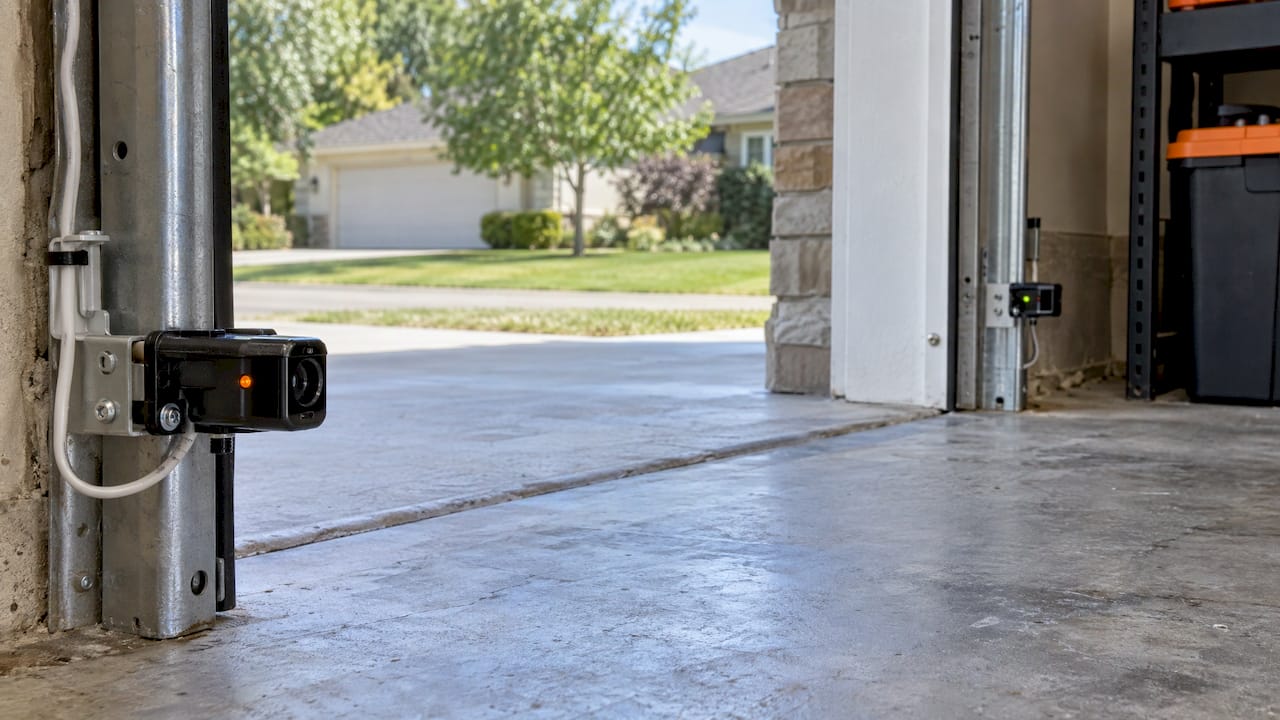
Newer openers also tend to offer features older units lack, such as quieter operation and smartphone control. If you are weighing brands, our guide to LiftMaster openers and which one to choose lays out the models and features.
A monthly check that protects the opener
DASMA recommends making a monthly inspection and test of the door and opener system a regular routine. Their guide includes the following checks you can do safely as a homeowner:
- Safety reversal test. Place a solid object, such as a board or a roll of paper towels, on the floor in the door’s path and close the door. It should reverse when it touches the object.
- Photo eye test. Wave an object in front of the sensor while the door is closing. The door should reverse. The guide also says the sensor should be mounted no higher than 6 inches from the floor.
- Balance check. With the door closed, pull the release handle so the opener is disconnected, then lift the door by hand. Move it only part of the way, and let a professional assess any door that feels heavy or will not stay put.
- Visual look. Check that the rollers, hinges and track look clean and undamaged, and that nothing is frayed or loose.
Stop at looking. Do not loosen, tighten or adjust the springs, the cables or the brackets that hold them. Those parts hold the full weight of the door under tension, and untrained adjustment is how people get hurt. If any check fails, or anything looks worn, call a professional.
Twice a year, a quick cleaning of the track and a light lubrication of the moving hardware, following the manufacturer’s instructions for your model, is plenty. We do this as part of preventive maintenance during a service visit if you prefer to leave it to us.
Repair or replace the opener?
Here is how we think about the decision with homeowners and property managers:
| Situation | Usually makes sense |
|---|---|
| Newer opener, one failed part such as a sensor, remote or circuit board | Repair |
| Opener under ten years old with an unbalanced door | Fix the door’s springs first, then retest the opener |
| Opener near or past 15 years, gear or motor trouble | Replace |
| Missing or unreliable safety sensors on an older unit | Replace, or have it inspected right away |
| Frequent repeat repairs | Replace |
The cost depends on the opener, the door, the parts needed and the condition of the rest of the system, so we do not quote numbers in an article. We give you a clear estimate before work starts, after we see the actual door. A repair that restores years of reliable use is the better choice. If you are heading toward replacement in the near future anyway, it may be wiser to put the money toward a new opener.
Replacing the opener and the springs together
If your door is around ten years old, the opener and the springs are often near the end of their lives at about the same time. When a technician is already on site for one, it can be convenient to check the other. A new opener on a door with tired springs will not last as long as it should. Replacing the springs can bring the door back into balance so that the opener works the way it was designed to.
See our guide to spring replacement options if you are comparing choices for your door. If cables are frayed or have snapped, read what to do about a broken garage door cable. A door that has jumped its track is covered in our off-track guide.
Perspective: why we pair opener and spring checks
We get plenty of calls where the homeowner is sure the opener has died. In a good share of them, the opener is fine and the door is out of balance because a spring has weakened or broken. The opener hums, the door will not move, and the assumption is a dead motor.
That is why we look at the whole system before recommending anything. We check the springs, cables, rollers and track along with the opener, so you are not paying to replace a part that was never the problem.
Our approach is simple. We give you a clear estimate before we begin repairs, we use quality replacement parts, and we tell you plainly if the opener has years left or if it is time to plan for a new one. We would rather you make a good decision with the facts than rush one at the worst moment.
One more thing: please leave springs and cables to us. They are under high tension, and a spring that looks calm can hurt someone badly. If you hear a bang from the garage or see a gap in the coil, call us. We offer 24/7 emergency garage door service, and same-day appointments are subject to availability.
Sean Smith
Get an opener or spring checked in Colorado Springs
Pro Spring Garage Door is a locally owned company serving homes, rental properties and businesses in Colorado Springs, Fountain, Monument, Woodland Park, Falcon, Pueblo and surrounding communities. We handle opener repair and installation, torsion spring replacement, cable replacement, new door installation and preventive maintenance.
If your opener is showing its age, or your door feels off, call us at (719) 257-3379 for an estimate. You can also read about our opener repair and installation service, or see how our garage door repair work covers the rest of the door. Planning a bigger change? Our new garage door installation page explains that option. Costs vary with the service and the parts involved, so we provide a personalized estimate once we know what your door needs.
FAQ
How long do garage door openers last?
Most last 10 to 15 years. How often the door is used, how well the door is balanced and how well the system is maintained all shift that range. If your opener is approaching 15 years, it is smart to start planning ahead.
How long do garage door springs last?
Torsion springs are commonly rated for 10,000 to 15,000 cycles, which is about 7 to 10 years at four uses per day, while extension springs are rated for fewer. A busy household reaches those cycle counts sooner. Have a technician inspect springs that are showing wear rather than waiting for one to break.
Can I replace a garage door spring myself?
We do not recommend it. Springs and cables operate under high tension and can cause serious injury if handled without training and the right tools. Call a professional for any spring or cable adjustment, removal or replacement.
Is my garage door opener broken or is it the spring?
It can be either. If the motor runs but the door barely moves, or the door feels very heavy by hand, a spring is a likely cause. If the opener makes no sound at all, or the remote and wall button both fail, the opener or its power may be the problem. A technician can tell quickly during a visit.
Do you offer emergency service?
Yes. We offer 24/7 emergency garage door service in Colorado Springs and the surrounding areas we serve. Same-day appointments are subject to availability. Call (719) 257-3379.
Sources
- Genie: signs it is time to replace your garage door opener
- The Home Depot: how to maintain garage door openers
- Raynor: garage door spring types and lifespan
- DASMA TDS-190: factors affecting spring cycle life
- DASMA: automatic garage door opener safety and maintenance guide
- 16 C.F.R. Part 1211: safety standard for automatic residential garage door operators
This article is provided for general informational purposes only. Garage door springs, cables, and other components can be dangerous to repair without proper training and equipment. For professional garage door repairs, contact Pro Spring Garage Door at (719) 257-3379. We provide 24/7 emergency garage door services throughout Colorado Springs and surrounding communities.